The Clear Route Through a Room: What Furniture Placement Changes
A clear route through a room makes everyday movement easier to read. Trace how people enter, turn, pause, and pass before shifting furniture.
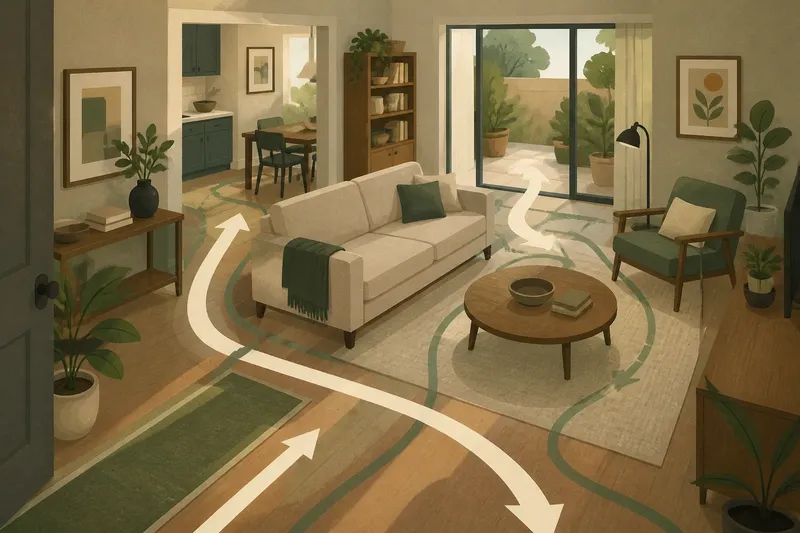
A clear route through a room starts at the doorway, not on the floor plan. Watch where people step when they enter, where they turn to reach a seat, and which corners they skirt; those habits reveal what furniture placement is asking them to do. A sofa can look well positioned and still force a visitor to cross the middle of a conversation or squeeze behind someone carrying a plate.
Think of circulation as a sequence of small decisions. A person chooses a destination, changes direction, passes an obstacle, and settles. Notice that sequence before moving furniture. The aim is not to make every path straight or empty. It is to let the room’s everyday routes feel legible, with enough room for the actions that happen there.
Where does the room’s main route begin?
Start with the most-used entrance: the door from a hall, kitchen, or patio. Follow the route to the room’s most common destinations, such as a sofa, dining chair, window, or cabinet. Then notice the less obvious trips: carrying laundry through a bedroom, taking a drink from the kitchen to a seat, or walking around a pet’s resting spot.
Make a simple route map on paper. Draw the room’s outline and mark doors, openings, and fixed features. Add arrows for the paths people use, rather than the paths you wish they used. A few days of casual observation can show whether one route dominates or whether people regularly cut across the room in different directions.
For a more immediate check, lay painter’s tape on the floor to suggest the edge of a proposed route. Keep it flat and out of the way, and remove it after the trial. This can help you see whether a new sofa position leaves a natural approach to the seating area or sends everyone around its back.
Which paths need the clearest passage?
Give priority to routes people use often, especially those that connect two openings or lead to a frequently used seat. A path from a hall door to a kitchen opening may matter more than a direct line to a decorative corner. The route should make sense from the moment someone steps in; if a chair blocks the view or forces an abrupt turn, the arrangement may feel awkward even when the room is not crowded.
Consider what people carry. A person holding a laundry basket, serving dish, or child needs a different kind of passage than someone walking empty-handed. Look for places where a carried object would brush a lamp, catch a chair back, or require the carrier to turn sideways. That contact point often identifies the furniture piece most worth shifting.
Also notice when routes overlap. If someone must walk through the seating area to reach a doorway, the path may interrupt conversation. If the dining chairs block the route to a cabinet when pulled out, the room’s use changes at mealtime. Test the arrangement in both its ordinary state and its active state: chairs tucked in, then pulled out; doors closed, then open.
What does a route reveal about furniture placement?
Furniture shapes movement through its edges, not just its footprint. A sofa arm can create a sharp turn; a rounded corner may make that turn easier to read. A low table can invite people to walk around it, while a narrow console beside a doorway can make the entry feel pinched. Look at the whole outline of each piece, including handles, recliner footrests, and chair backs.
Use furniture to define a destination without building a barrier in front of it. A sofa can mark the edge of a conversation area, for instance, while leaving an open approach from the main entrance. A rug can help distinguish that seating area, but its edge should not become an obstacle where people naturally turn or walk. The route and the arrangement should support each other.
When moving a large piece, change one thing at a time. Shift the sofa, then walk the common paths before moving the table or chairs. If several pieces change at once, it becomes harder to tell which adjustment helped. Keep a quick note of the original position or take a phone photo, so you can compare the room’s feel without relying on memory.
Say you enter a living room from a narrow hall and find the sofa’s back facing the doorway. Imagine rotating the sofa so its side faces the entrance, while leaving a direct approach to the seats and keeping the route to the patio open. The expected observable result is that a visitor can understand where to walk and where to sit without cutting through the center of the conversation.
How can you test a new route without committing?
Try a temporary arrangement before dragging every piece across the floor. Move lightweight chairs first, or use painter’s tape to mark where a larger piece might sit. Walk the route at a normal pace, then repeat it while carrying something you commonly take through the room. Notice where you slow down, turn sharply, or reach out to steady yourself.
Include the furniture in its working position. Pull out a desk chair, open a cabinet door, or extend a dining chair as people would use it. A route that looks clear with everything tucked away may disappear during ordinary use. If a door or drawer is involved, check its full swing or travel without forcing it against nearby objects.
Try the route from both directions. A passage can feel open when approaching from a doorway yet awkward when leaving a seat. Also consider who uses the room: a child, an older adult, or someone carrying items may need a less complicated path. For accessibility or mobility concerns, a qualified professional can help assess the space. Follow product instructions and local requirements where they apply.
What questions help you read a room’s routes?
How do I find the main path through a room?
Start at the entrance people use most, then follow their usual destinations. Watch the paths they actually take over ordinary routines, including trips made while carrying things.
Should a route run along a wall or through the center?
Neither position is automatically better. Let the room’s openings and activities guide the route, and avoid making people cross a focused activity when a more direct edge path is available.
How much space should I leave between furniture?
There is no single spacing rule that suits every room or user. Check the passage in use, account for doors and pulled-out chairs, and consult a qualified professional if mobility access is a concern.
What if people keep taking a path I did not plan?
Treat that repeated shortcut as useful information. It may connect two destinations more naturally than the route you intended, so consider moving an obstacle or reorienting a piece to make the observed path easier to use.
When should you keep a route slightly indirect?
A clear route does not have to expose every destination from the doorway. A small turn can separate an entry from a seating area or keep a bedroom door from opening directly onto a bed. The useful distinction is between a route that feels deliberate and one that makes people hesitate because furniture seems to block the way.
Look for a comfortable transition rather than a perfectly straight line. A console or chair can guide someone around a corner if it leaves the passage understandable and does not become a snag point. If people keep brushing past it or stepping around it unpredictably, the piece is probably occupying the route rather than shaping it.
As you revise furniture placement, keep the clear route through a room tied to real destinations and routines. Trace the entrance-to-seat path, test the space with doors and chairs in use, and pay attention to the spots where movement slows. A small adjustment to one piece can make a room easier to read without changing its character.